Real micro-cement, or micro-cement-look vinyl?
The soft, cloudy concrete look is one of the surface trends leading Singapore interiors now, and it comes two ways. One is real micro-cement: an actual cement coating troweled onto your floor by hand. The other is that same look printed onto vinyl. They can be hard to tell apart once they are down, but they are built and behave very differently, so it is worth knowing which you are pricing.

Same look, two very different floors
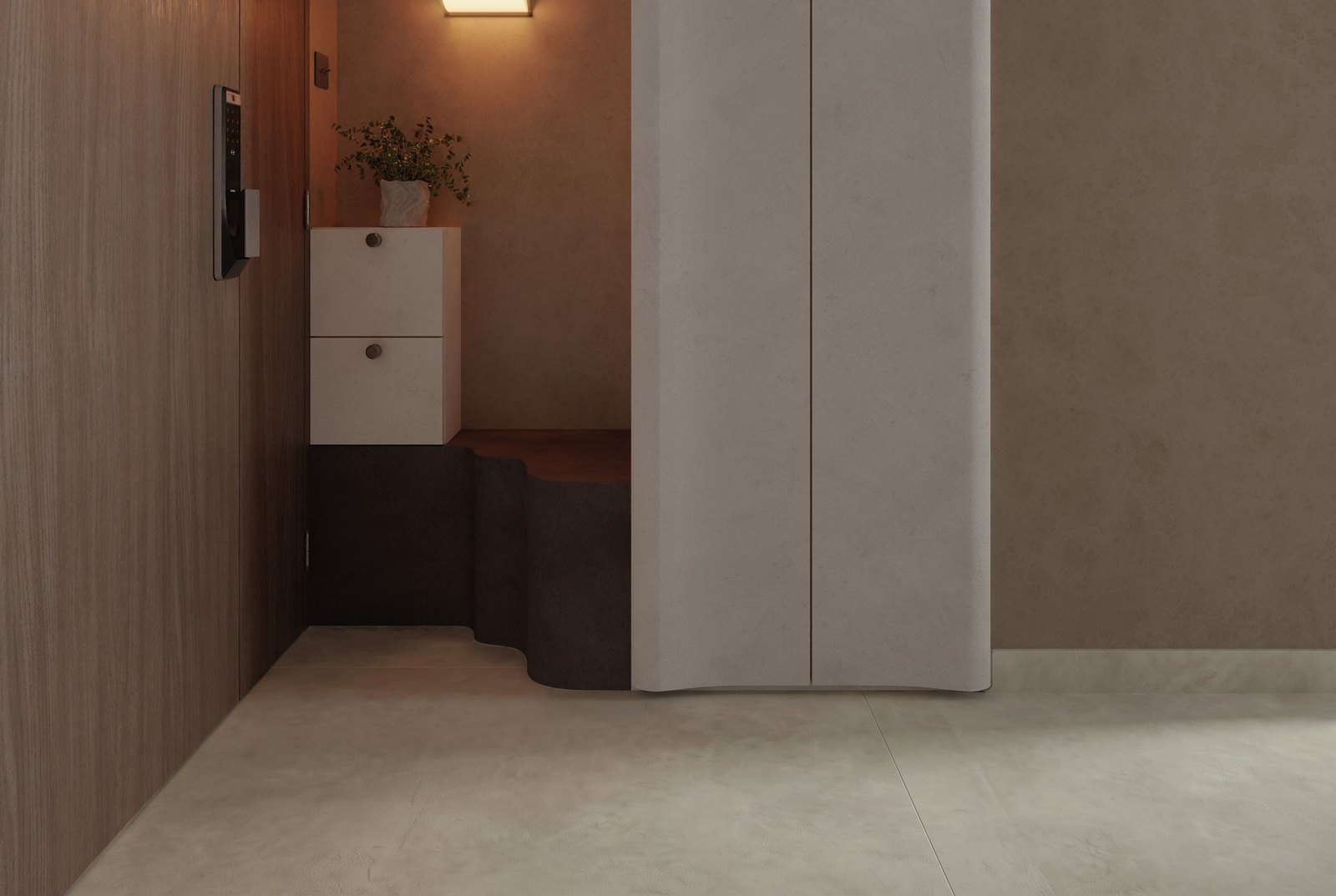
Both floors give you the same thing to look at: a seamless, matte, poured-concrete surface with soft grey movement, no planks, no grout grid. That concrete look is one of the surface trends now leading Singapore interiors (Sky Creation). What sits under that look is where they split.
Real micro-cement (you will also see it called microcement or béton ciré) is a genuine cement product, a thin layer of the material itself spread over your floor. Hana Flooring's micro-cement is a rigid SPC (stone polymer composite) vinyl tile with that concrete look printed and embossed on top. One is cement; the other is the picture of cement on a waterproof vinyl floor. Neither is a fake in a bad sense, but they ask for very different things from your home, your budget and your patience.
Real micro-cement: a wet trade
Real micro-cement is applied like a plaster. A skilled installer trowels several thin coats of a cement-and-polymer mix over a prepared base, sands between coats, and then seals the surface. The result is genuinely seamless and monolithic, a single continuous surface with no joins at all, which is its real appeal.
The trade-offs come with the process. It is a wet, dusty, multi-day job, and the finish has to cure and be sealed before the room goes back into use. Because it is a real cement layer, it can develop fine hairline cracks as it cures and as the building moves, which many owners accept as part of the character but some do not want. The sealer wears and needs re-coating over the years, and a damaged patch is genuinely hard to blend back into a seamless surface. Done well by the right hands, it is beautiful; it is also the more demanding and usually more expensive path.
Hana micro-cement vinyl: the look without the wet trade
Hana's micro-cement series gives you the same concrete look on a floor that behaves like the rest of the range. The tiles are large, 914 mm square, close to the size of a real stone slab, and they come in four tones: Mist, Dune, Clay and Graphite. Laid down, they read as one poured surface with only fine hairline seams.
Because the tiles are that large, they are glued down rather than clicked, bonded to a prepared floor with a no-added-formaldehyde adhesive. Underneath is the same rigid, 100% waterproof SPC core as the wood planks, so it is happy in kitchens and wet-prone areas, it will not crack, and it stays softer and quieter underfoot than a real cement or stone floor. In most homes it lays over your existing tiles with no hacking, there is no long cure, and a damaged tile can be lifted and replaced. For the full install story, see how the stone tiles are laid.
Real micro-cement and the vinyl, side by side
| Micro-cement vinyl (Hana) | Real micro-cement | |
|---|---|---|
| What it is | The cement look printed on a rigid SPC tile. | A thin cement-and-polymer coating, troweled on by hand. |
| Install | Large tiles glued to a prepared floor; walk on it the same day the adhesive sets. | A wet trade: several troweled coats, sanding, then curing and sealing over days. |
| Waterproof | 100% waterproof through the SPC core. | Water-resistant only once sealed; the sealer needs re-coating over time. |
| Cracking | Will not crack; it is a vinyl tile, not a cement layer. | Can develop fine hairline cracks as it cures and the building moves. |
| Repairs | A damaged tile lifts out and swaps for a new one. | A patch is hard to blend into a seamless troweled surface. |
| Seams | Reads as one poured surface with fine hairline seams. | Genuinely seamless, monolithic. |
| Underfoot | Softer and quieter than a cement or stone floor. | Hard, like the concrete it is. |
Which suits a Singapore home?
If you want a truly seamless, monolithic cement floor, you have the budget for a skilled wet trade, and you are relaxed about hairline cracks and re-sealing over the years, real micro-cement is the real thing and nothing else looks quite like it.
For most homes, though, the vinyl gets you the concrete look with far less to worry about: it is waterproof, it will not crack, it goes down fast over your existing floor, the colour is factory-consistent, and it is softer and quieter to walk on. If you like the pared-back concrete aesthetic, see our guide to a warm-minimalist micro-cement look, or try the tones in your own room with the flooring visualiser.