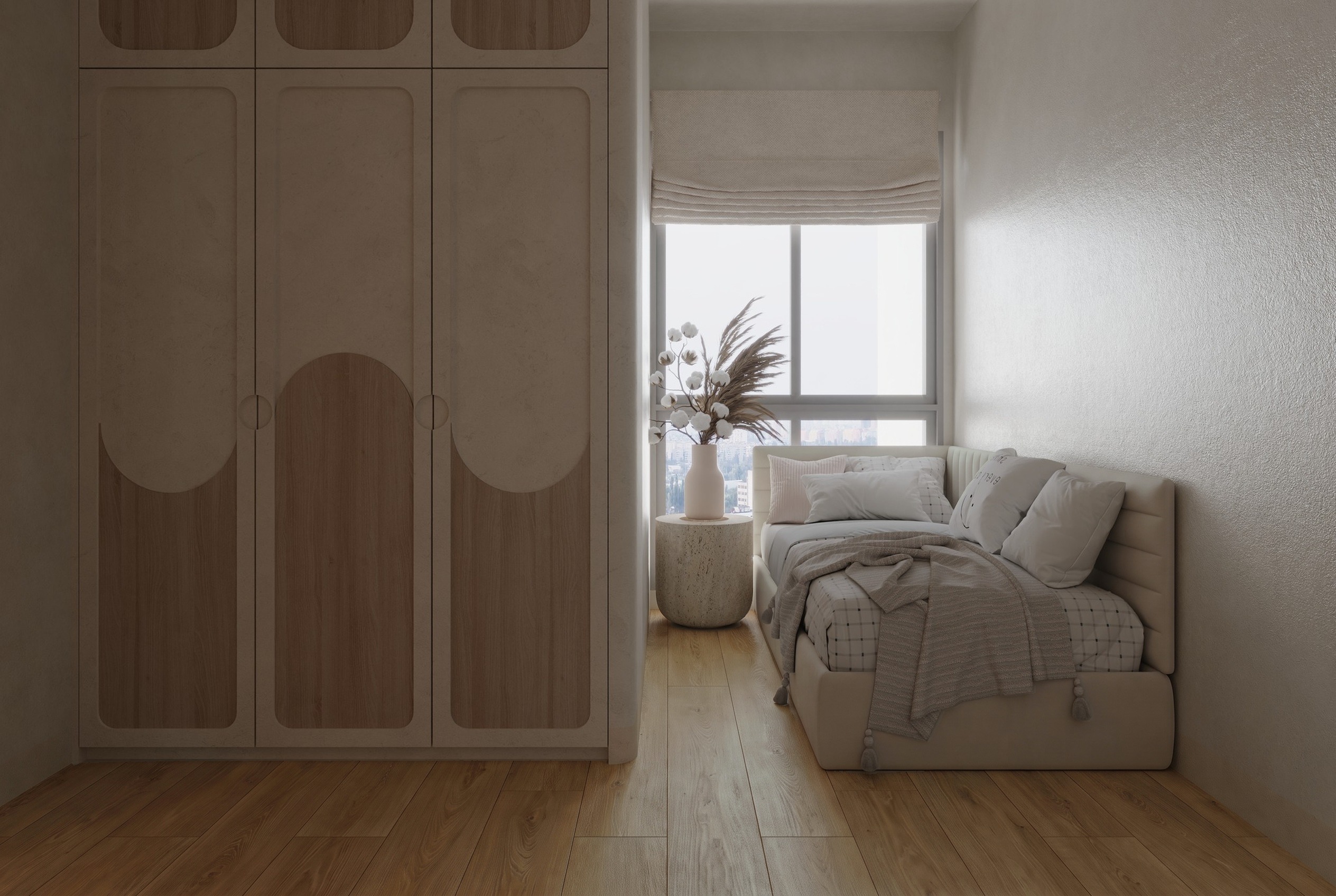
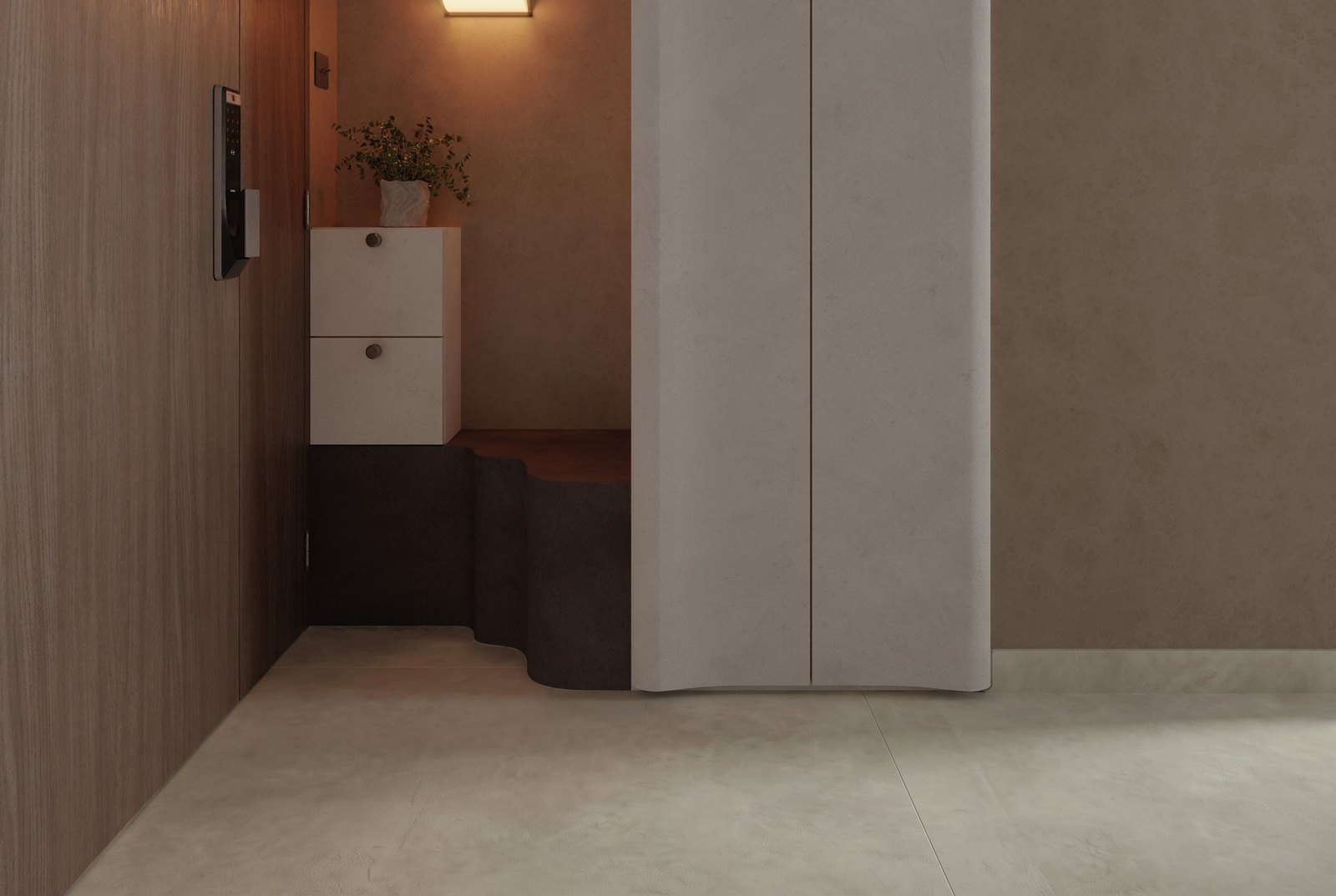
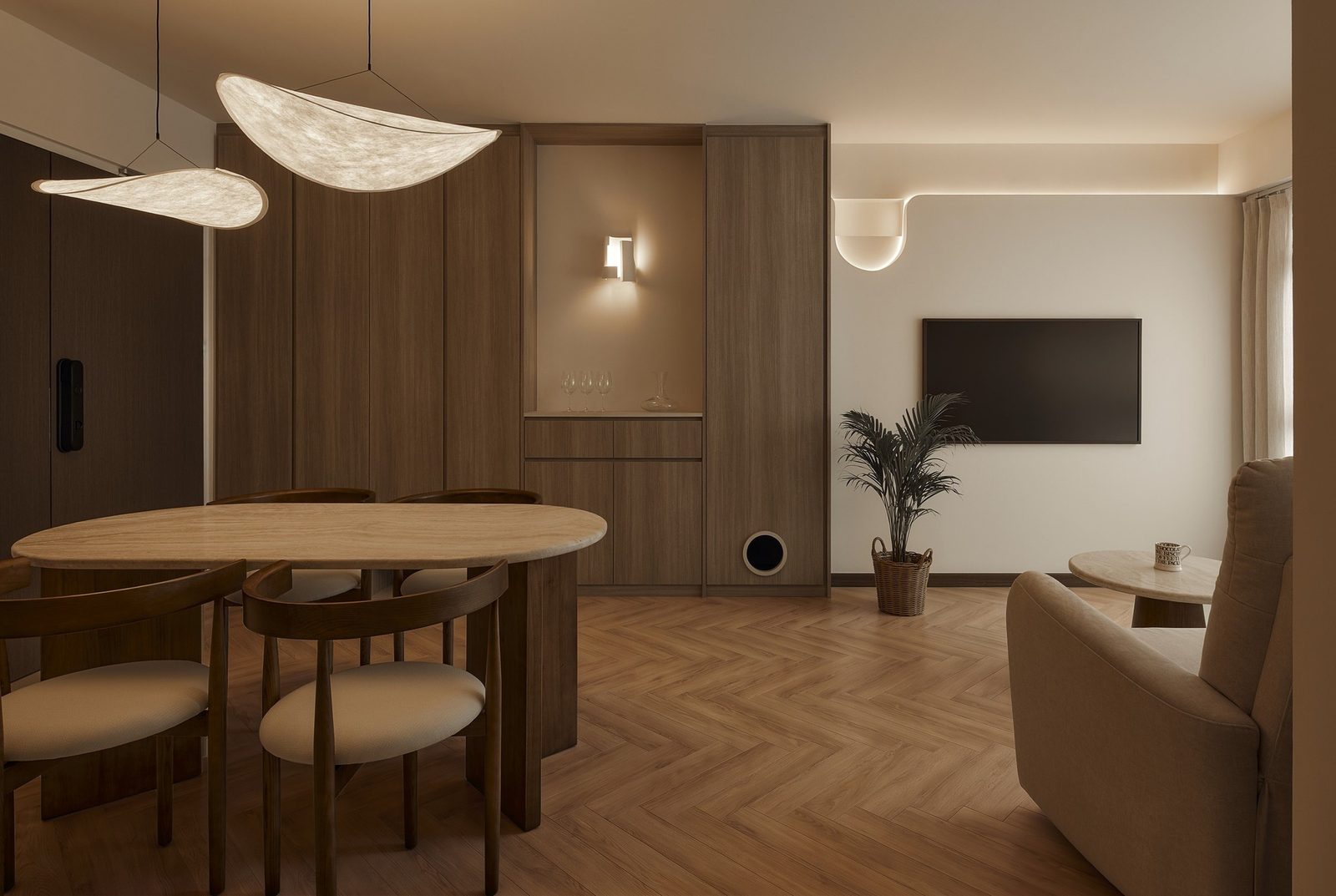
The warm-minimalist micro-cement look, in vinyl
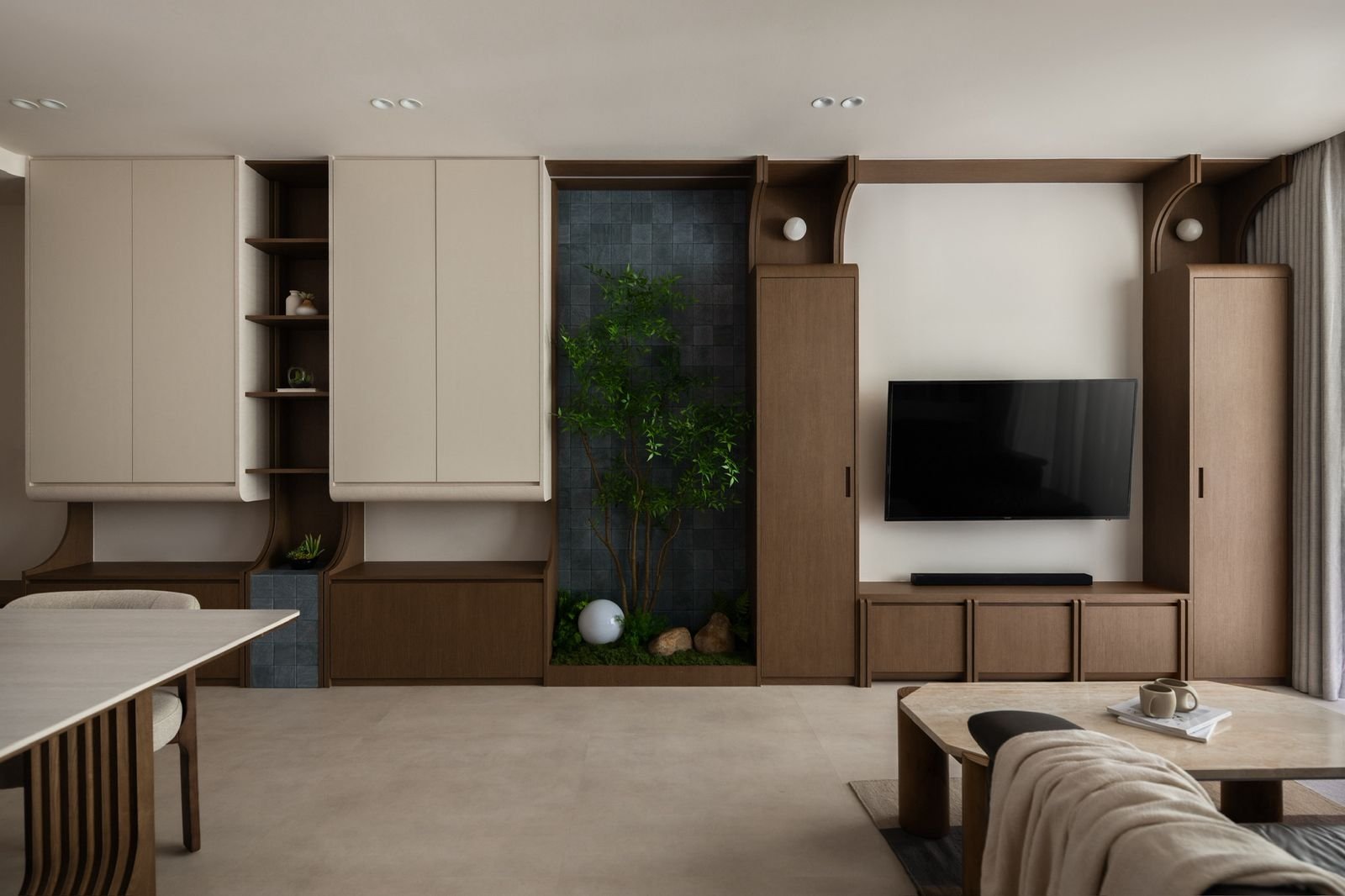
This warm, pared-back look is one of the styles leading Singapore home design now: soft neutral walls, one honest wood, a little greenery, and a floor that stays quiet and lets the room breathe. The floor is what holds it together. Here it is a seamless micro-cement surface that reads like poured stone, and it is actually waterproof LVT. This is a real Hana Flooring home, so here is how the look is made.
The floor sets the whole mood
A floor is the biggest single surface in a room, so a calm one calms everything above it. A seamless, stone-toned floor with no busy grid of lines lets the eye travel across the space, which makes a compact flat feel larger and more restful. Pair it with warm wood and soft light and you have the whole warm-minimalist, Japandi feeling, most of it coming from the floor. It is one of the looks now leading Singapore home design (Swiss Interior).
It looks like real micro-cement. It isn't.
Real micro-cement and poured cement give that soft, seamless, matte look, but in a home they ask a lot of you. They can hairline-crack as the surface moves, they need sealing and resealing to stay clean, they feel hard and echoey underfoot, and laying them is a wet, messy trade.
Hana's stone series prints those same soft, cloudy micro-cement tones onto the floor, so you get the poured-cement look without the cracking, the sealing or the hardness. Up close it reads as genuine cement; underfoot it behaves like the rest of the range.
Why vinyl wins this look in a Singapore home
The surface you see is a wear layer over a rigid LVT (luxury vinyl tile) core, so it is 100% waterproof through the core, not seams that eventually let go. It stays soft and quiet underfoot where real stone or tile feels hard and echoey, and it does not hairline-crack or need sealing the way real micro-cement does. In most homes it lays straight over your existing tiles or screed, so there is no hacking and no rebuild.
How the seamless look is actually done
The stone series comes as large tiles, 914 mm square, close to the size of a real stone slab. At that size a click joint cannot stay flat, so the tiles are glued down with a no-added-formaldehyde adhesive. Laid tight, they read as one poured surface with only fine hairline seams, not a grid of small tiles. If you want the full step-by-step, see our guide on how the micro-cement stone tiles are laid.
Styling the warm-minimalist look
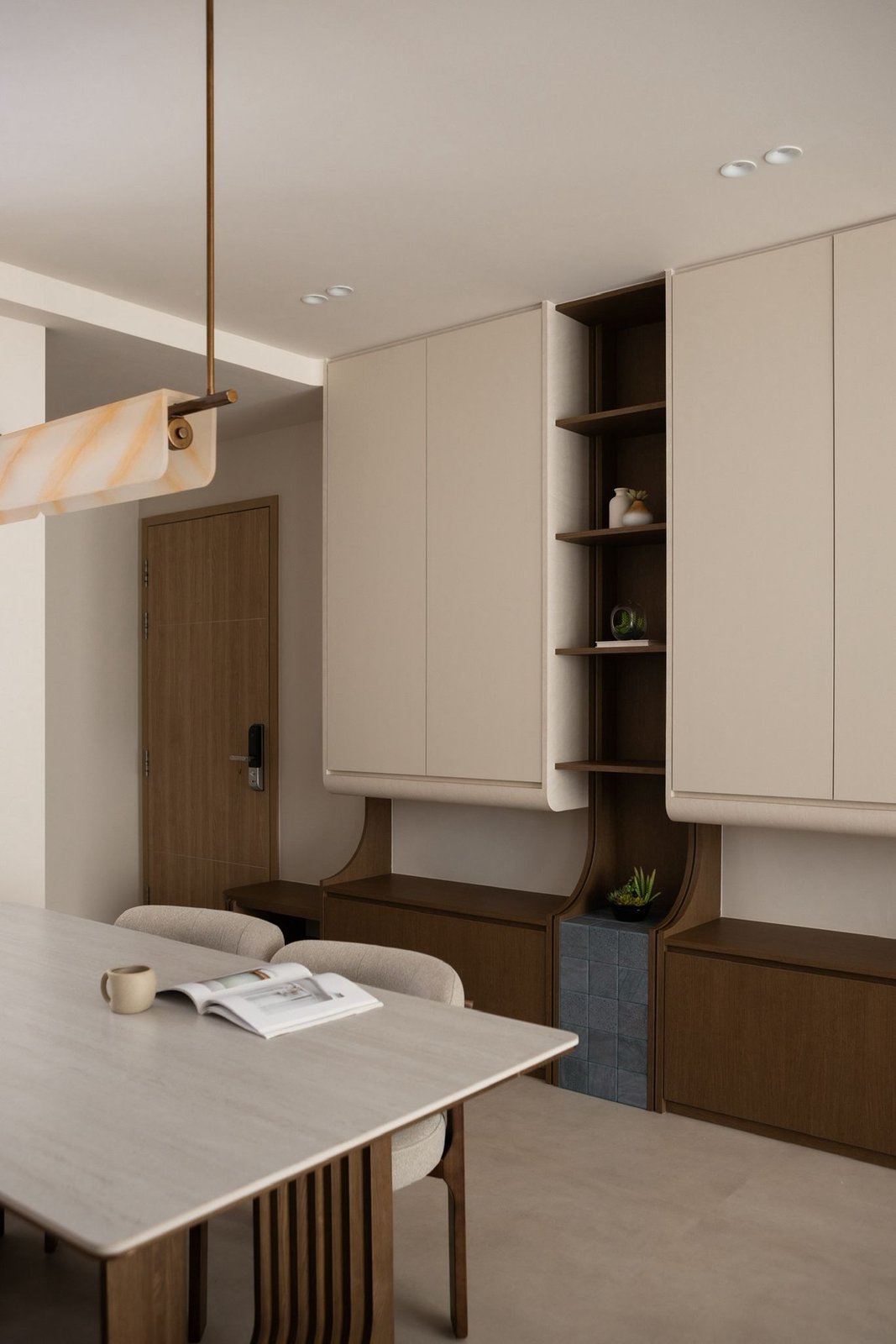
The floor does the heavy lifting; keep everything else quiet and warm. In this home the seamless floor sits under soft off-white joinery, one warm mid-brown wood, and a single stone-and-greenery feature that gives the calm palette something to rest on. Keep the palette tight: soft neutrals, one honest wood, a calm floor, and let texture rather than colour do the work.
Then pick the floor tone for the feeling you want. The micro-cement tones run from lighter to deeper, Dune, Mist, Clay and Graphite. Lighter tones like Dune or Mist bounce the light around and open up a small flat; a deeper Graphite reads more dramatic. Run one tone across the whole home, as in these photos, and the space feels continuous rather than cut into zones.