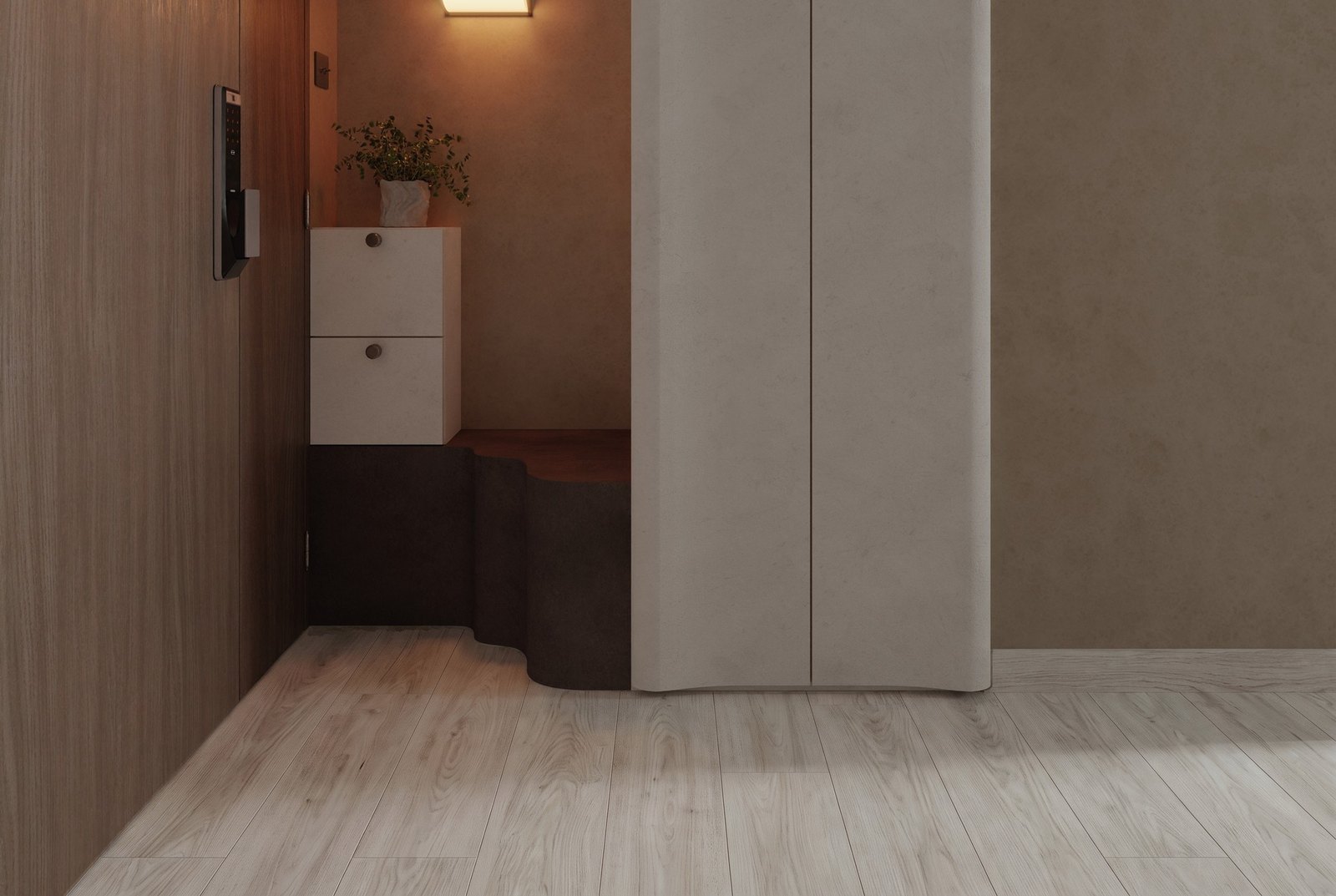
Herringbone vinyl flooring, the classic pattern made waterproof
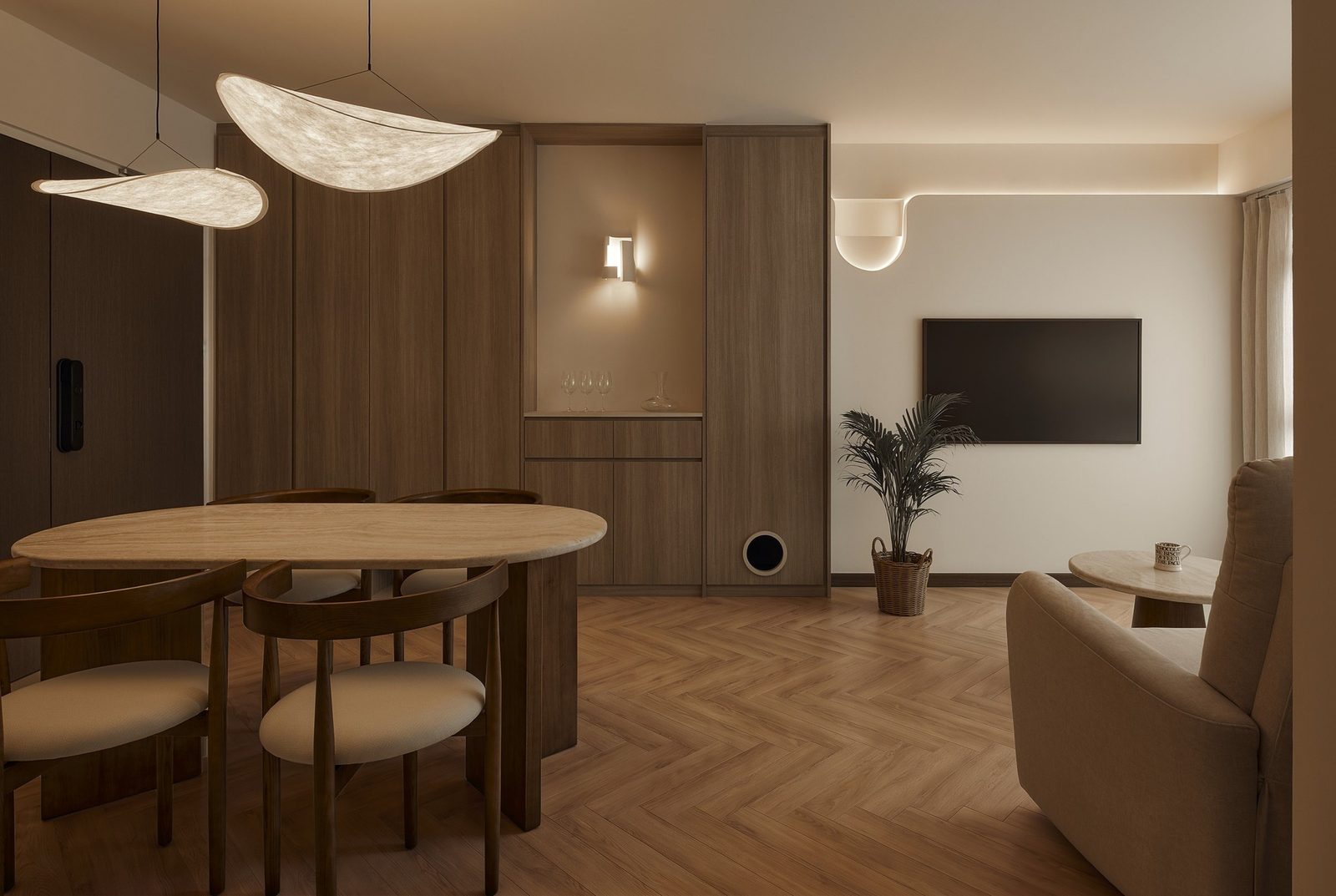
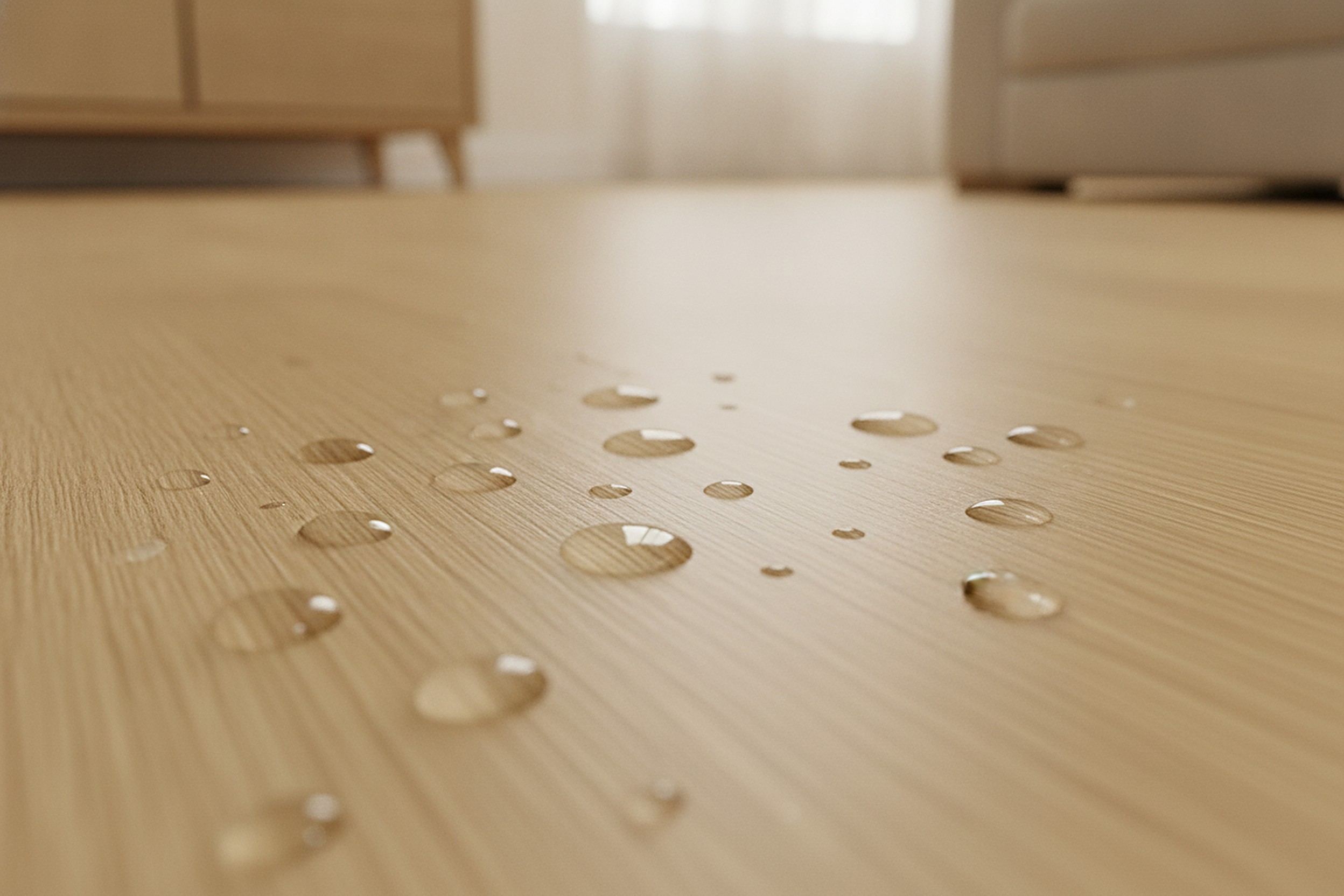
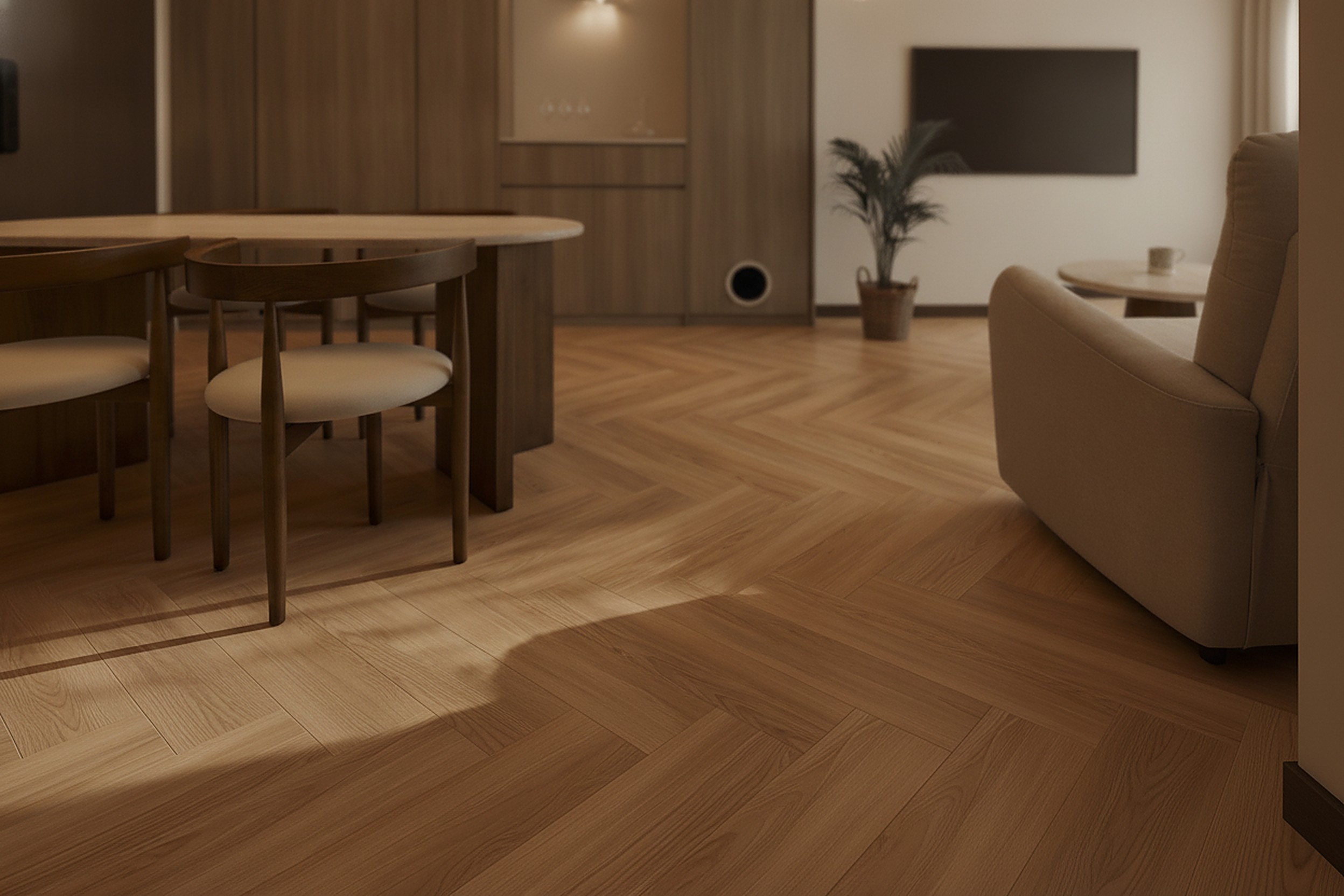
Herringbone is the pattern that makes a floor look considered. Hana Flooring's Heritage Herringbone collection lays that classic zig-zag in rigid, waterproof LVT (luxury vinyl tile), so you get the parquet look of a heritage apartment without the cost, the glue or the humidity worries of real wood.
- No hackingOverlay tiles or screed
- Välinge 5G clickAngle, push, locked
- No glueNo smell, no added formaldehyde
- ReversibleLift & replace anytime
What herringbone is, and why it reads as 'considered'
Herringbone is a floor laid from rectangular planks set at 90 degrees to each other, so the ends step along in a broken zig-zag. It is the look of a classic parquet floor, and it has a way of making a room feel finished and intentional rather than simply covered.
The pattern draws the eye along its lines, which is why designers reach for it to add movement to an otherwise quiet room. It works just as well in a compact HDB living area as it does in a larger condo, as long as the tone suits the light.
Hana Heritage Herringbone, in three tones
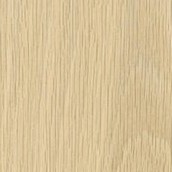
Hana's Heritage Herringbone collection comes in three tones: Ethereal Oak, a pale, airy oak that keeps a room bright; Nordic Oak, a soft, neutral mid-tone; and Umber Walnut, a deep, dramatic brown for rooms that can carry it.
The planks are 122 × 610 mm, shorter and narrower than the 180 × 1220 mm straight planks, because a herringbone is built from many small pieces. Each one is 5 mm of rigid LVT with a 0.5 mm commercial wear layer on top, the same waterproof core as the rest of the range.
Herringbone, chevron or straight plank?
The three lays are easy to tell apart once you know what to look for.
- Herringbone: plank ends cut square, meeting at 90 degrees in a stepped zig-zag. The traditional parquet look.
- Chevron: plank ends cut at an angle so they meet point to point in a continuous V. Sharper and more contemporary.
- Straight: long planks in parallel rows. The quietest, and the most forgiving in a busy room.
Herringbone is the busiest of the three, so it looks best against simpler walls and furniture. A pale oak keeps a small room open; save the deep walnut for larger or well-lit spaces.
Laying herringbone in a Singapore home
Heritage Herringbone clicks together with the Välinge 5G locking system, no glue, and lays over a sound, level existing floor with a 3 to 7 mm expansion gap at the walls. In many homes that means laying straight over your existing tiles with no hacking.
Because a herringbone is built from many small planks set at an angle, it takes longer to lay and creates more offcuts than a straight floor, so the labour costs a little more. What you get for it is 100% waterproof LVT in a pattern that lifts the whole room. If you are laying over an existing floor, see our guide to laying vinyl over tiles without hacking.