Vinyl or tiles for your HDB? An honest comparison
Almost every HDB flat already comes with a tiled floor, so the honest question is rarely "tiles or vinyl" from scratch. It is "do I hack the tiles that are there, or lay a new floor over them?" Here is a straight comparison of tiles and Hana Flooring vinyl for an HDB home, including where tiles are still the better choice.
Vinyl or tiles for an HDB: which is better?
For the dry living areas and bedrooms of most HDB flats, laying a Hana Flooring SPC (stone polymer composite) vinyl floor over the existing tiles is the easier, cleaner win: no hacking, little dust, done in a day or two, soft and quiet underfoot, and fully reversible.
For wet areas and for the longest-wearing surface money can buy, tiles are still the honest choice. Neither is simply "better"; they win at different things, and the rest of this guide is about which matters for your flat.
The real HDB question: hack the tiles, or lay over them?
Removing an existing tiled floor means hacking, and HDB treats that as regulated building work: a noisy job restricted to weekday daytime hours and a short window, followed by a wet trade of screed, waterproofing and grout, plus debris to clear (see HDB's renovation guidelines).
Laying a new floor over the existing tiles is the alternative HDB expressly allows: new finishes may be laid over old ones with adhesive, as long as the total floor build-up stays within the thickness HDB caps it at. Over sound, level tiles that keeps the original slab untouched and skips the whole wet trade. It's a big reason overlay vinyl suits a lived-in flat, and we cover the method in vinyl flooring over your existing tiles.
One rule to know: for a newer flat, HDB does not allow the toilet and wet-area finishes it provided to be replaced for the first few years, though you may still lay over them. Check the current guidelines for your flat before planning wet-area works.
Where tiles genuinely win
A good honest comparison has to say where tiles are still ahead, because they are.
- Hardness and scratch resistance. Porcelain tile is harder than any vinyl wear layer. It resists scratches, dents and sun-fade that a vinyl surface, good as it is, can pick up under a dragged sofa leg or years of harsh sun.
- Lifespan. Well-laid porcelain can last the life of the flat with little change. Vinyl has a finite wear layer and a shorter service life, even if that life is long.
- Wet areas. Bathrooms and the like belong to tiles laid over a proper waterproofing membrane. That is the correct system there, and it is generally what HDB requires.
Where vinyl wins
Where vinyl pulls ahead is everything around living in the home, not just the surface (a trade-off Singapore renovation guides describe the same way).
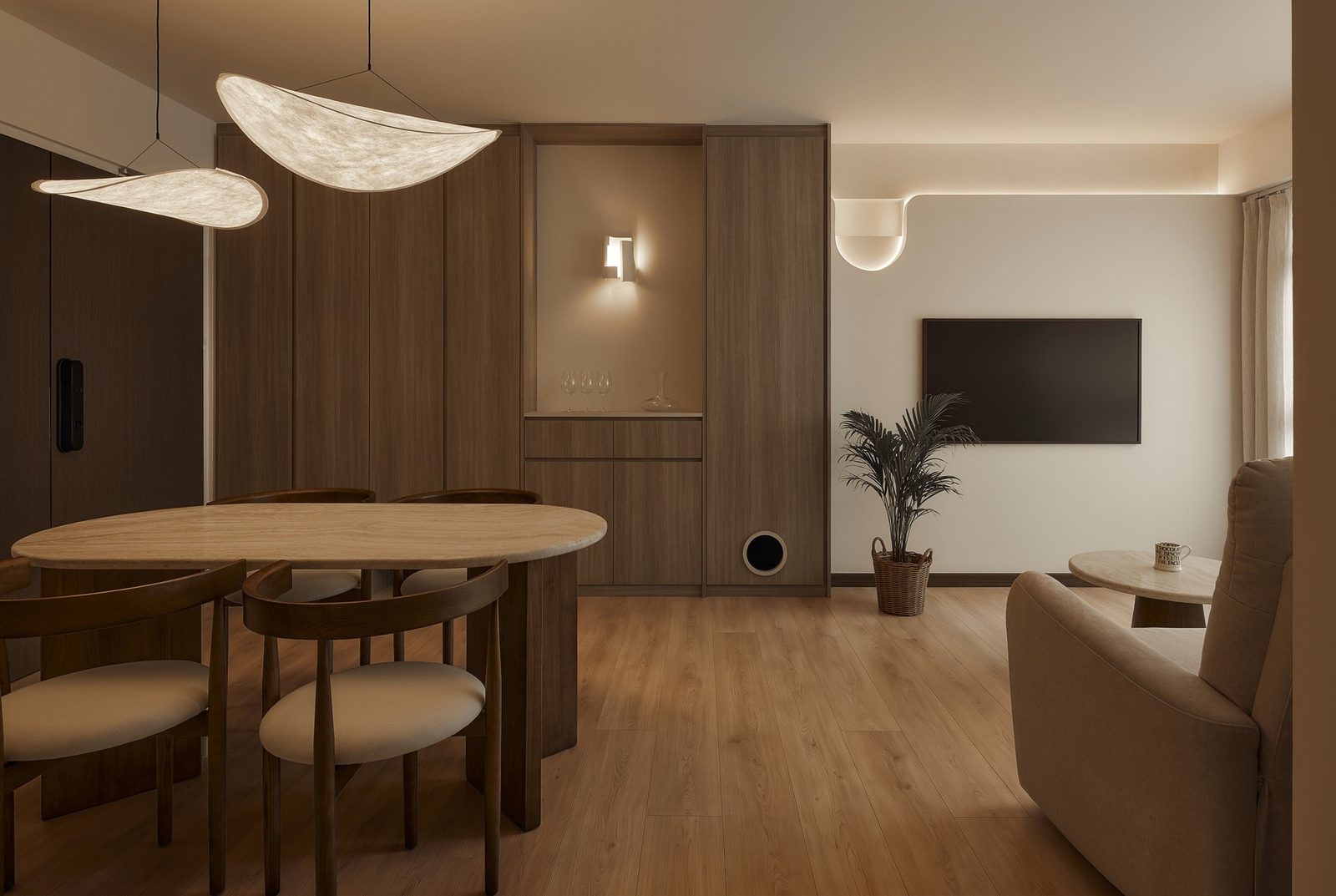
- Install without hacking. The wood-look planks click together straight over your sound existing tiles, so a whole flat can be done in a day or two with barely any dust and no wet trade. The large micro-cement tiles are glued down instead, for their size.
- Softer and quieter underfoot. Tiles are hard and echo footsteps; a rigid vinyl floor gives a little and dampens impact noise, which is gentler to stand on and to live above.
- Seamless, no grout to keep. Tile grout lines catch dirt and discolour and need periodic upkeep; a vinyl floor reads as one continuous surface with nothing to scrub. Keeping it clean is just a sweep and a damp mop.
- Reversible. Because it lays over the original floor rather than replacing it, a vinyl overlay can come up again, and the slab underneath is untouched.
So which for your flat?
Put the wet areas aside for tiles and a proper membrane. For the living room, bedrooms and the rest of the dry floor, a vinyl overlay is usually the better all-rounder in an HDB: fast, clean, quiet, seamless and reversible, with none of the hacking.
If you are weighing vinyl against wood rather than tile, see SPC vs real timber; or try a finish in your own room first with the flooring visualiser.
Sources
The factual and market claims on this page are sourced here: